TransitionFiles.com

Search results for “Chemieindustrie”

× Back to overview

Ausweichen auf die Schiene? Die Bahn hat den Rhein in diesem Jahr selbst gesperrt

This post is only available in German.

Der Pegel Kaub stand am 1. Oktober bei minus sechs Zentimetern. Heute, am 14. Oktober, zeigt er 13 Zentimeter. Der alte Rekord aus dem Jahr 2018 lag bei 25 Zentimetern – und wurde in diesem Jahr am 5. August zum ersten Mal unterschritten. Zwischen St. Goar und Rüdesheim fahren laut Wasserstraßen- und Schifffahrtsamt nur noch vereinzelt Güterschiffe. Der Rhein ist, wie es Thomas Puls vom Institut der deutschen Wirtschaft formuliert, „de facto erneut zweigeteilt“.

Die Antwort der Chemieindustrie darauf klingt vernünftig. Der Verband der Chemischen Industrie fordert, dem Güterverkehr auf der Schiene Vorrang zu geben, Sonntagsfahrverbote auszusetzen und Not-Umladestellen zu öffnen. „Wir dürfen nicht warten, bis aus einem Transportproblem ein Produktionsstopp wird“, sagt Hauptgeschäftsführer Wolfgang Große Entrup.

Ich habe mir angesehen, was hinter dem Satz „Vorrang für die Schiene“ steckt. Drei Dinge fallen auf.

Erstens: Die Mengen

Ein Binnenschiff trägt bei normalem Wasserstand rund 4.000 Tonnen. Das entspricht nach Rechnung des VCI 67 Eisenbahnwaggons oder 160 Lkw. Anders gesagt: Für jedes Schiff, das nicht fährt, braucht es zwei bis drei Ganzzüge – je nach Gut und Wagentyp, die Spanne ist meine Schätzung.

Zur Einordnung die Verteilung der Güterverkehrsleistung in Deutschland im Jahr 2025: Straße 72 Prozent, Schiene 20 Prozent, Binnenschiff 5,5 Prozent. Das Schiff ist der kleinste Verkehrsträger – aber auf dem Rhein ist es für die Chemie der entscheidende. In Ludwigshafen gehen rund 40 Prozent der ein- und ausgehenden Güter über den Fluss. Thomas Puls bringt es auf den Punkt: „Ohne die Binnenschifffahrt gäbe es die meisten großen Chemieparks entlang des Rheins gar nicht.“

Die Schiene müsste also keinen Verkehrsträger ersetzen, sondern ein paar Prozentpunkte zusätzlich aufnehmen. Das klingt machbar. Wenn sie frei wäre.

Zweitens: Die Schiene ist in diesem Jahr selbst eine Baustelle

Seit dem 10. Juli und noch bis zum 11. Dezember 2026 ist die rechte Rheinstrecke zwischen Troisdorf und Wiesbaden voll gesperrt. 160 Kilometer Generalsanierung, über 60 Kilometer Gleis, 116 Weichen, 1.100 Stelleinheiten. Die DB InfraGO hat das im Januar angekündigt. Die Strecke ist Teil des Korridors Rotterdam–Genua, die hessenschau nennt sie „Europas meistbefahrene Güterzugstrecke“.

Die Güterzüge werden umgeleitet: auf die linke Rheinstrecke oder weiträumig über Frankfurt, Gießen und Kassel. Die linke Rheinstrecke fährt also seit Juli für zwei. Das ist der Zustand, in dem der Verband „Vorrang für den Güterverkehr“ fordert. Vorrang auf einem Gleispaar, das bereits den umgeleiteten Verkehr des zweiten trägt.

Und im kommenden Jahr ist die linke Rheinstrecke mit der Sanierung an der Reihe.

Mir ist wichtig, hier fair zu bleiben: Die Generalsanierung ist überfällig, und irgendwann muss sie stattfinden. Aber Juli bis Dezember sind nicht irgendwann. „September und Oktober sind die klassischen Niedrigwassermonate“, sagt Florian Krekel vom Schifffahrtsamt in Bingen. 2018 lief das Niedrigwasser von August bis Dezember. Das Sperrfenster 2026 deckt sich mit dem Niedrigwasserfenster nahezu vollständig. Ob es dafür zwingende Gründe gab, weiß ich nicht. Dass es niemandem aufgefallen sein soll, glaube ich nicht.

Drittens: Der größte Anbieter baut ab

DB Cargo hat 2025 rund 58,5 Milliarden Tonnenkilometer gefahren, 14,6 Prozent weniger als im Vorjahr. Das Ergebnis lag bei minus 58 Millionen Euro. Die EU-Kommission verlangt im Beihilfeverfahren, dass das Unternehmen bis Ende 2026 profitabel arbeitet. Am 17. September hat Vorstandschef Bernhard Osburg eingeräumt, dass die schwarze Null in diesem Jahr nicht erreicht wird. Der Sanierungsplan sieht vor, rund 6.200 von etwa 14.000 Vollzeitstellen in Deutschland abzubauen.

Wer in dieser Lage kurzfristig zusätzliche Züge, Lokführer und Wagen für Chemiegüter bereitstellen soll, muss sie irgendwo hernehmen. Die privaten Güterbahnen können einen Teil übernehmen. Aber auch sie fahren über dieselbe gesperrte Strecke.

Die Zahlen auf einen Blick

WasWertStand
Pegel Kaub, Tiefststand−6 cm1. Oktober 2026
Pegel Kaub, heute13 cm14. Oktober 2026, 20:15 Uhr
Alter Rekord Kaub25 cmOktober 2018
Ein Binnenschiff4.000 t = 67 Waggons = 160 LkwVCI
Anteil Binnenschiff an der Verkehrsleistung5,5 %2025
Anteil Schiene19,9 %2025
Sperrung rechte Rheinstrecke10. Juli bis 11. Dezember 2026DB InfraGO
DB Cargo, Verkehrsleistung 202558,5 Mrd. tkm (−14,6 %)März 2026
DB Cargo, Ergebnis 2025−58 Mio. €September 2026
DB Cargo, geplanter Stellenabbau6.200 von 14.000September 2026
Abladeoptimierung Mittelrheinfertig 2033BMV
Förderung Flottenmodernisierunghalbiert auf rund 18 Mio. €2026

Was ich daraus mitnehme

Jede dieser Entscheidungen ist für sich genommen begründbar. Die Wasserstraße wird vertieft – bis 2033 am Mittelrhein, bis 20

0 comments
Like Comment

From Moscow to Washington: We Swapped the Dependency, We Did Not End It

In mid-September, Germany's gas storage sites are just over 55 per cent full, roughly 136 terawatt hours. The Federal Network Agency points out that this is already slightly more than was withdrawn over the whole of last winter – just under 134 terawatt hours – and that injection can continue until the end of October. That is correct. It is also the friendliest reading the numbers allow. The gas price is around 134 per cent above last year's level, and according to the storage operators' scenarios a normal winter requires about 77 per cent by 1 November.

I wrote about the storage sites two weeks ago. Today it is about the question behind them: where does the gas come from that is supposed to fill the gap – and who, as a result, owns our winter?

The answer is the United States, and that should reassure no one

In 2025, 96 per cent of the liquefied gas arriving through Germany's terminals came from the United States. That is a good ten per cent of all German gas imports. Add the American LNG that is passed on via Belgium and the Netherlands, and the US share is around one fifth. At EU level, 29 per cent of all gas imports in the first quarter of 2026 came from the United States; for LNG alone it was 57 per cent. Norway remains Germany's most important supplier at 44 per cent – by pipeline, secured under long-term contracts, and at the limit of its capacity.

Then there is a contract. In the Turnberry agreement of July 2025, the EU committed to purchasing around 750 billion dollars' worth of US energy by the end of 2028, predominantly LNG and oil – in return for a tariff cap of 15 per cent. So we have not merely accepted the dependency; we have signed it.

Now, dependency on the United States is not the same as dependency on Russia, and anyone who equates the two is making it too easy for themselves. Russia could turn off a pipeline; the gas was physically gone. American LNG is a commodity on a world market. If Washington stopped exports to Europe, the gas would go to Asia and we would buy other gas away from there – dearer, but available. A market expert interviewed by ntv therefore regards the mere announcement of an export halt as the real lever: it drives the price, not the availability. That is the difference. Moscow had its hand on the valve. Washington has its hand on the price.

For a household heating its home in January, that is no consolation. And for the chemical industry, the largest industrial gas consumer in Germany, the price decides whether a site produces or not.

What can be done for this winter

The McKinsey analysis from March reaches a sober conclusion: supply is more robust today than in 2022, and a disruption can technically be compensated – at high cost and with tangible risks. The building blocks are known, and they are finite.

First: inject now. Six weeks remain. That the economics minister rejects state intervention is a decision, not a law of nature. A state-procured reserve of ten terawatt hours would buy the insurance that the market does not buy when summer prices exceed winter prices. It costs money that the Federal Network Agency would have to spread via a levy anyway – just before the winter rather than after it.

Second: max out the pipelines. Norway is delivering close to its capacity limit; not much more will come from there. From France, around seven billion cubic metres a year have been possible since this year, now that the deodorisation plant that had limited eastward flows is in place. That is the quietest and most robust reserve we have.

Third: buy LNG more broadly. Qatar's export infrastructure is damaged and will be out for the medium term. That leaves Canada, Nigeria, Algeria, Egypt – dearer, further away, but not tied to Washington. And there is a homework assignment that is embarrassing: the terminal at Stade could regasify 7.7 billion cubic metres a year, but can feed only 1.7 into the grid by year end. The grid connection was only approved in March. We built terminals and forgot the pipe.

Fourth: demand. Forty per cent of German gas consumption goes to households and commerce, sixty to industry. One degree less room temperature saves around six per cent. In power generation, gas plants can be replaced by coal and oil for a few weeks – a step backwards for climate policy, a buffer for security of supply. And industry showed in 2022 that fuel switching and process adjustments in the double-digit percentage range are possible when the price forces them.

Fifth: buy as Europeans rather than against each other. The EU platform for joint procurement has existed since 2023. If twenty countries bid for the same tankers in January, the tanker wins.

That is enough for a normal winter. For a cold January it is probably enough at prices we already saw once in 2022. For a cold January combined with a supply halt from Washington it is not enough without cuts. That is the situation, and it was avoidable.

The only way out: needing less gas

Everything so far manages the problem. It is solved at one point only: the quantity of natural gas we still have to import at all. Every terawatt hour that disappears from the system is one that neither Moscow nor Washington nor Doha can negotiate with us about.

The path there has three layers, and they interlock.

The first layer is electrification. Power from wind and sun is the only energy that is produced in Germany itself in relevant quantities. Heat pumps instead of gas boilers, electric process heat instead of gas burners in industry, battery-electric trucks instead of diesel – I wrote about that a week ago. The price is a power system that doubles in size: annual demand rises from around 500 to over 1,100 terawatt hours by 2038, peak load from 80 to a good 190 gigawatts, mainly due to heat pumps in winter. The grid development plan reckons with 630 gigawatts of grid capacity against 200 today. That is the largest infrastructure task since post-war reconstruction, and it is the prerequisite for everything else.

The second layer is batteries. In June 2026, around 30 gigawatt hours of battery storage were installed in Germany. They balance hours – midday against evening, wind against calm overnight. They do that very well, very fast and by now very cheaply. What they cannot do: bridge a week of dark, windless weather in January. No realistic battery build-out changes that. For hours, batteries are the answer. For days and weeks, a different medium is needed.

The third layer is hydrogen – as a bridge and as storage. Here it pays to be precise, because a great deal of nonsense has been talked about hydrogen. Hydrogen will not run a heating system; it is too expensive and too inefficient for that. Nor will hydrogen power trucks – the market has decided that. Hydrogen has two jobs, and both are indispensable.

One is the bridge. The power plant security act has been tendering 12 gigawatts of new capacity since this year: hydrogen-ready gas plants, storage and flexible loads. These plants will initially run on natural gas, a few hundred hours a year, precisely during the dark lulls – and will be converted as soon as hydrogen is available. Then there is the core network: around 9,000 kilometres by 2032, 60 per cent of it repurposed natural gas pipelines. We are literally building the hydrogen economy into the pipes through which the gas from Texas still flows today.

The other job is seasonal storage. Summer power that is surplus in July is turned into hydrogen by electrolysis, stored in caverns and converted back to electricity in January. That is inefficient – two thirds of the energy is lost along the way – and it is nevertheless the only way to carry energy from one season to another. Germany has a geological advantage here that almost no neighbour has: salt domes in which caverns can be created. RWE will commission Germany's first commercial hydrogen storage facility at Gronau-Epe in 2027, 28 million cubic metres. Today's natural gas storage holds 250 terawatt hours; as hydrogen storage, given the lower energy density, that would be only around 50. A new cavern takes eleven years from planning to operation.

Eleven years. Anyone who wants to store seasonally in 2037 has to start in 2026. That is not a metaphor; that is the construction time.

Where we actually stand

Honestly: the ramp-up is stalling. Of the ten gigawatts of electrolysis that were supposed to be in place by 2030, a fraction is in operation. The steel companies are postponing their direct reduction plants. Uniper is planning larger storage capacities only from the mid-2030s, on condition that they pay. And grid charges have doubled in five years.

One could conclude from this that the transformation has failed. I conclude the opposite. The winter of 2026/27 shows what the alternative costs: we are paying two and a half times the price for gas whose origin we cannot choose, to a supplier who understands the price as a political instrument, and we have written it into a contract until 2028. Every euro that goes into a heat pump, a substation or a cavern is a euro we do not have to transfer to Texas year after year.

The storage sites save this winter. The transformation saves the next twenty. Both together would be precaution. Either alone is hope.

My question to you: where would you put the first euro – into the strategic gas reserve for this winter, or into the cavern that will be ready in 2037?

Sources

0 comments
Like Comment

# Amazon Goes Electric – and Shows Where Heavy Haulage Really Gets Stuck

On 9 September, Mercedes-Benz Trucks handed over the first 27 eActros 600 to Amazon in Germany. By the end of the year there are to be more than 50, part of an order of over 200 vehicles for Germany and the United Kingdom – the largest order of heavy electric trucks Amazon has ever placed. They will run on what is called the middle mile, between fulfilment centres and urban delivery stations. The company puts its investment in electrifying its European transport network at more than a billion euros, over 400 million of that in Germany.

I start with Amazon because the example shows three things at once: that the vehicles exist, that their use pays off when the operating profile fits – and that the real bottleneck lies elsewhere.

What the manufacturers deliver

Three years ago the electric tractor unit was a promise. This week several production models stand side by side in Hanover, and the ranges have crossed a threshold.

The eActros 600 covers around 500 kilometres at 40 tonnes gross combination weight, with 621 kilowatt hours in three LFP battery packs. MAN is showing the new eTGX with up to 644 kilowatt hours and up to 720 kilometres under favourable conditions; the standard version has 552 kilowatt hours and 660 kilometres. Volvo quotes up to 700 kilometres for the FH Aero Electric with 780 kilowatt hours, orderable since the summer. Scania, DAF and Renault Trucks have their own model lines. And Tesla has for the first time given figures for the European version of the Semi: around 550 kilometres at 40 tonnes and consumption of roughly one kilowatt hour per kilometre – a remarkable figure, if it holds up in winter, on gradients and at motorway speed. Tesla still names no price.

These manufacturer figures apply to good conditions. In practice, fully loaded, one should reckon with 70 to 80 per cent of them. But even then the message is clear: for domestic long haul with daily distances up to 500 kilometres the battery suffices, and with one charging stop during the mandatory 45-minute break it stretches to 800 to 1,000 kilometres a day.

Hydrogen no longer plays a role in this segment. In 2025 fuel-cell trucks reached a market share of 0.1 per cent in Europe.

How far the market has come

The numbers are, frankly, still small. In the EU in the first half of 2026, some 3,400 of 146,000 heavy trucks over twelve tonnes sold were zero-emission – 2.3 per cent, up from 1.4 per cent a year earlier. Diesel holds 92 per cent. Germany stood at 4.6 per cent in the second quarter, above the EU average; the Netherlands reached over 18 per cent in 2025, Norway almost 17.

Globally the picture is different: the IEA counts more than 400,000 electric trucks sold in 2025, a global share of nine per cent – driven by China. Europe is not the pioneer here; Europe is catching up.

What a tractor unit costs

No manufacturer publishes list prices; everything is negotiated. As a rule of thumb, reckon with one and a half to two times the price of a diesel tractor unit; for the eActros 600 a figure of around 300,000 euros is circulating, while a comparable diesel costs 100,000 to 120,000. That is the investment hurdle, and it is real.

Operating costs turn the picture around. Mercedes-Benz Trucks itself reckons with around 40 euros in fuel per 100 kilometres for the diesel tractor unit against just under 24 euros in electricity for the eActros 600 – at depot charging on a favourable tariff, not at the public charger. Add lower maintenance, because engine, gearbox and exhaust after-treatment disappear.

The largest single item, however, is the road toll. Battery-electric trucks are fully exempt until 30 June 2031; a Euro 6 diesel pays around 35 cents per kilometre in 2026, so roughly 35,000 euros at 100,000 kilometres a year. The greenhouse gas quota adds up to 5,800 euros annually for heavy electric trucks. Over five to seven years, according to common calculations, cost parity arrives at around 60,000 to 70,000 kilometres of annual mileage – below that diesel stays cheaper, above it the balance tips.

Two items are missing from this calculation, and both are uncomfortable. The residual value of an electric truck after seven years is unknown, because none is that old yet. And the charging infrastructure at the depot costs between 100,000 and 500,000 euros depending on the grid connection – a sum that spreads across a fleet of ten vehicles but blows up the calculation for a single one.

Why infrastructure decides

This is the core. Amazon can electrify because Amazon has its own depots, runs scheduled line-haul services and, by its own account, is installing hundreds of charging points at its European sites. That is the profile in which electric trucks work today: overnight depot charging, fixed routes, return to base.

The mid-sized haulier with changing tours across Europe does not have that profile. He needs the public network – and that is only just coming into being.

The state of play: the first public megawatt charging point in Germany went into operation in September 2025 on the A2 motorway, at 1.2 megawatts. The technical specification for the Megawatt Charging System was published only in February 2026; it allows up to 3.75 megawatts. Milence, the joint venture of Daimler Truck, Traton and Volvo, aims to operate 50 charging parks in ten countries by year end, 18 of them in Germany, and to reach 90 parks with 284 megawatt charging points by 2028. The federal government has had a programme of 1.6 billion euros approved: up to 1,410 charging points at more than 120 unserviced motorway rest areas, the majority of them megawatt chargers. The first 836 points have been awarded; E.ON and Tank & Rast are building 195 of them at 24 sites.

That sounds like a lot. It is the beginning. And the real hurdle appears in none of these announcements: for the rest areas, grid connections have to be realised with more than 90 distribution network operators. A charging park with eight megawatt points needs a connection of the kind a mid-sized industrial company has. Permits, land, transformer station, cabling – in Germany that takes two to four years. Milence has therefore integrated a stationary battery into its charging park in Kassel to make do with a weaker grid connection. That is a clever workaround, but it is a workaround.

I see the same pattern here as in the chemical industry: the technology is further along than the grid that is supposed to supply it. The vehicles come from Wörth, Munich and Gothenburg – the transformer stations come from permitting procedures.

Where the trucks already are

There is a charging infrastructure that appears in no funding programme, because it already exists: the industrial sites.

A large chemical park on the Rhine handles more than 1,000 trucks a day. They run fixed relations – to the port, to the customer, to the neighbouring site –, they wait at the gate, they are weighed, loaded and unloaded, and they come back. That is exactly the profile in which Amazon runs electric today. Except that a chemical park has something neither Amazon nor the motorway rest area has: a grid connection designed for energy-intensive production. The transformer station that a motorway charging park fights three years for has stood there for decades.

That shifts the arithmetic. The federal government is investing 1.6 billion euros to create grid connections at rest areas that already exist at industrial sites. A chemical park that equips its gates with charging points replaces part of that network – for the trucks that call there anyway, and in principle for those merely passing by. Twenty megawatt charging points at a site with a thousand truck movements a day would be more than the first Milence corridor between Paris and Berlin has today.

That it has hardly happened so far has reasons, none of them technical. The site operator is not a charging provider. The hauliers are many, and none of them is large enough to invest alone. And the grid connection belongs to production, not to the vehicles at the gate. A coordination problem in which any party could start and none has the incentive to go first.

I am not writing this purely as an observer. At the site where I work, precisely this start has been made: site operator and site logistics provider are tackling the subject together. Whether it becomes a model for other industrial sites will be decided over the next two years – and by whether hauliers and shippers come along. Anyone interested will find me.

What this means for the industry

The EU is tightening CO2 limits for heavy-duty vehicles to minus 45 per cent by 2030 and minus 90 per cent by 2040 against 2019. The manufacturers have responded, visibly so in Hanover. The toll exemption until 2031 gives fleet operators five years of planning certainty – what the equation looks like after that is open.

For logistics companies this means: anyone running depot-based services with high mileage today can make the electric case and should. Anyone dependent on the public network has to match their core routes against the planned sites and will probably run a mixed fleet for another two to three years. And anyone who defers the switch to 2030 will find that grid connections and charging parks are even scarcer then than now.

What remains open for me is whether the federal government's 1.6 billion euros will be enough if the ramp-up actually arrives – and who builds the grid connections when the distribution network operators are already at capacity with heat pumps, wallboxes and industrial electrification.

My question to you: do you see the bottleneck in the vehicle, in the price or in the grid – and what would have to happen first for mid-sized companies to make the switch as well?

Sources

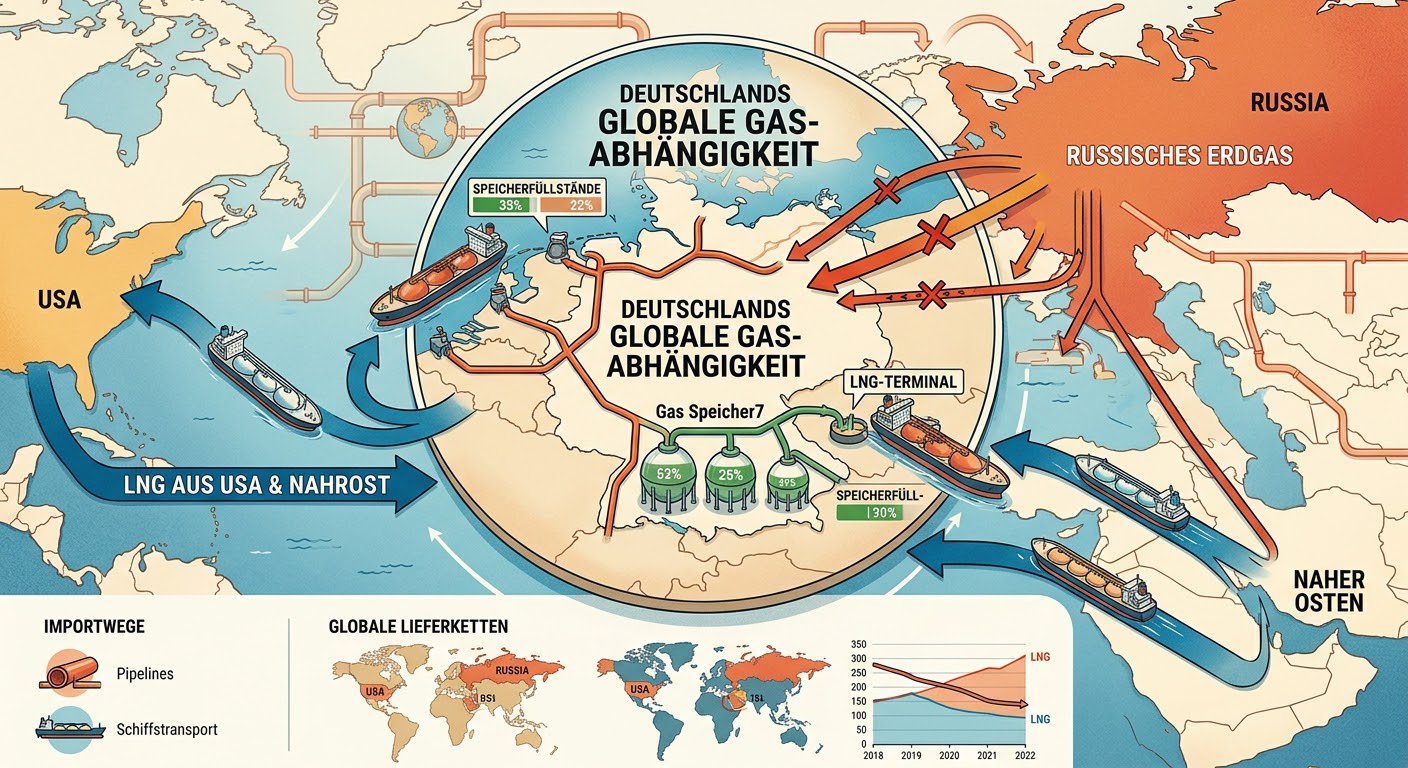
Image: concept study, AI-generated.
0 comments
Like Comment

Between Breakthrough and Breakdown: What Is Really Moving the Chemical Industry Right Now

The news of the past few days shows an industry pulling in two directions at once. On one side, companies are investing in recyclates and circular solutions. On the other, the search for an investor for the insolvent Leuna Polyamid at the central German chemical park in Leuna has failed – 400 jobs are at stake, and the phrase "industrial ruin" is appearing in the coverage. This simultaneity cannot be argued away.

I will start with Leuna, because it occupies me most. The chemical park there is a symbol of East German industrial history – and at the same time a test case for whether the much-cited transformation of the chemical industry also reaches the places where the pressure is greatest. That Chancellor Merz visits the site and warns against the AfD says a great deal about how politically charged the subject has become. According to reports, the operator of the chemical park is not asking for speeches but for concrete measures. What exactly is meant by that remains vague. What is clear: if a site of this size falls away for want of an investor, that is not a local problem. It is a signal to every other chemical site wondering whether it will still exist in twenty years.

At the same time I see money flowing elsewhere – in modest amounts, admittedly. Polyblend, a TotalEnergies subsidiary, is investing four million euros in the production of plastic composites containing recyclate at its site in Bad Sobernheim, Rhineland-Palatinate. Four million is not a large sum, but the direction is right: an offshoot of an oil group is betting on plastics with recycled content, on products that reduce the use of virgin material. That fits the broader trend I have been watching in recent months – brand manufacturers are building confidence in recyclates, because regulatory pressure is mounting and because customers are increasingly asking for them.

What gives me pause is what the current budget dispute in Berlin reveals. More funding for the circular economy, less room for industrial transformation – that appears to be the political course in a sentence. At first glance this seems contradictory, yet it follows a certain logic: recycling and circularity are politically popular and comparatively cheap to support. The deep restructuring of energy-intensive industrial sites is expensive and its effects are harder to communicate. What that means for places like Leuna, which would need both, cannot yet be judged.

So my reading is this: at the level of materials and products, something is moving. Recyclates are being taken more seriously, investment is flowing, and events such as the Renewable Materials Conference in Siegburg in September 2026 show that the topic is gaining momentum. But at the level of sites and structures – where thousands of jobs and decades-old industrial infrastructure are at stake – much remains open. The question of who pays for the transformation there, and who takes responsibility when no investor steps in, has not been answered.

I would be interested to know: do you think the circular economy is strong enough as a field of investment to stabilise structurally weak chemical sites like Leuna in the long run – or does that require different instruments?

Sources:
Chemiepark Leuna: Zäsur nach Insolvenz der Leuna Polyamid – https://news.google.com/rss/articles/CBMiwAFBVV95cUxNeF95…
400 Mitarbeiter betroffen: Investorensuche für Leuna Polyamid gescheitert – https://news.google.com/rss/articles/CBMizgFBVV95cUxPZWVy…
Merz warnt in Leuna vor AfD – Chemiepark-Betreiber fordert konkrete Taten – https://news.google.com/rss/articles/CBMivAFBVV95cUxPeEx5…
TotalEnergies-Tochter Polyblend investiert 4 Mio. Euro in Kunststoffcompounds mit Rezyklatanteil – https://news.google.com/rss/articles/CBMi9AFBVV95cUxNTFRn…
Haushalt II: Mehr Mittel für Kreislaufwirtschaft, weniger Spielraum für die industrielle Transformation – https://news.google.com/rss/articles/CBMi0AFBVV95cUxOTzFN…
Renewable Materials Conference vom 22. bis 24. September 2026 in Siegburg – https://news.google.com/rss/articles/CBMiUkFVX3lxTFBuOGtE…

0 comments
Like Comment

What the Insolvency of Leuna Polyamid Means for the Leuna Chemical Park

The Leuna chemical park is facing a turning point. With the insolvency of Leuna Polyamid, one of the long-established sites of the German chemical industry is losing another anchor tenant – and at a moment that could hardly be less favourable.

Leuna is no ordinary industrial park. The site in Saxony-Anhalt counts among the largest chemical complexes in Germany and hosts dozens of companies that produce in close interdependence. That is precisely the strength of such integrated sites – and at the same time their vulnerability. When one link in the chain breaks away, the neighbours feel it.

The insolvency of Leuna Polyamid should not be viewed in isolation. It belongs to a broader development that has been putting pressure on the German and European chemical industry for months: high energy costs, weakening demand from the automotive and mechanical engineering sectors, and mounting competitive pressure from Asia. Polyamides – engineering plastics used among other things in vehicle manufacturing – have been hit particularly hard by this drop in demand.

What occupies me about this case is the structural question behind it. Leuna has invested considerably in its transformation in recent years, with an eye on green hydrogen, recycling and new value chains. But such projects need investors willing to hold on even in a difficult market. When companies at a site like this go into insolvency, the question arises whether the transformation there will move faster or slower – and whether successors will use the vacated land and infrastructure for new, more future-proof production.

The parallel to developments along the Rhine and in the Benelux countries is hard to miss. Chemical sites there are wrestling with similar structural problems: how do you decarbonise an energy-intensive industry when the economic conditions are anything but stable? In Antwerp, home to BASF, Borealis and other major players, the discussion about hydrogen infrastructure and the circular economy continues – but there too it is by no means settled who will ultimately carry these investments and when they will pay off.

Leuna's situation shows that the energy transition in the chemical industry is not a linear story. There are setbacks, insolvencies, gaps in value chains. That is uncomfortable, but it is the reality of a transformation that cannot be planned on paper and instead takes place while the plants keep running.

What remains open for me is what happens to the employees of Leuna Polyamid, which companies might take over parts of the production or the infrastructure, and whether the Leuna chemical park as a whole can retain its appeal as a place to invest. These are not rhetorical questions – the answers will determine what the site looks like in ten years.

My question to you: do you see insolvencies like this as an unavoidable shake-out on the road to transformation – or as a sign that policymakers urgently need to improve the conditions for the chemical industry?

Sources:
Chemiepark Leuna: Zäsur nach Insolvenz der Leuna Polyamid – https://news.google.com/rss/articles/CBMiwAFBVV95cUxNeF95…

0 comments
Like Comment

Chemical Sites in Transition: What Genthin's Special-Purpose Association Reveals About Larger Trends

When municipalities and industrial players join forces to put a chemical park on a new institutional footing, it looks at first glance like a matter of local administration. The planned special-purpose association for the Genthin chemical park nevertheless deserves a second look – not because of Genthin itself, but because of what a step like this says about the state of the German chemical industry as a whole.

Chemical parks at mid-sized locations have been under pressure for years. Energy costs remain high, demand from the automotive industry and other traditional customer sectors is weak, and the large investments in decarbonisation have so far flowed above all to the big integrated sites – Ludwigshafen, Leverkusen, the port of Rotterdam, Antwerp. Those outside this core group are looking for ways to keep their own infrastructure attractive and to offer investors a reliable basis.

This is precisely where the idea of a special-purpose association comes in. A joint governing structure can signal planning certainty, make it easier to pool public funding and distribute responsibilities more clearly. Whether it works in practice is another question. Such constructions carry their own inertia, and chemical companies ultimately decide on site costs, logistics and the availability of skilled staff – not on organisational charts.

For me this raises a more fundamental question that goes well beyond Genthin: how many chemical sites can Germany actually sustain during this transformation? The energy transition is forcing the industry to rebuild its processes from the ground up – away from natural gas as the basis for heat and as a feedstock, towards green hydrogen, electrification and, in the long run, circular models that recover carbon from waste streams instead of buying it in fossil form. That requires enormous amounts of capital, and it will not be distributed evenly.

The chemical region along the Rhine and through the Benelux countries to Antwerp shows where this concentration tends to lead: large integrated sites with direct access to renewable energy, to ports and to a dense network of suppliers and customers attract investment, while peripheral locations fight for relevance. That is not a criticism but an observation – industrial transformation has always gone hand in hand with spatial concentration.

The circular economy could, in theory, shift this picture somewhat. If plastics recycling, chemical recycling and biorefinery concepts reach scale, new value chains will emerge that are not necessarily tied to historical petrochemical clusters. But here too: most of these approaches have yet to arrive at industrial scale, and the siting decisions for future plants will again be shaped by infrastructure and energy availability.

As for Genthin, it remains to be seen whether the association grows beyond an administrative gesture and actually attracts new tenants or investment. At the very least, the step shows a local willingness to take on responsibility in a structured way. That is not nothing – but on its own it is not enough.

I would be interested in your view: do you think smaller and mid-sized chemical sites in Germany have a realistic chance of holding their own through the transformation – or is concentration on a few large integrated sites ultimately unavoidable?

Sources:
https://www.welt.de/regionales/sachsen-anhalt/article6a97…

1 0 comments
Like Comment